Rheia Verify: Airflow balancing. Easy and Accurate.
How many of your HVAC installations are balanced to the design?
How many comfort complaints do you deal with a month?
What does a comfort callback cost you?
Today, the HVAC balancing of a new home is neglected because it is time-consuming and inaccurate, making it a leading cause of comfort complaints when not done correctly. Balancing a home without data is a wild goose chase.
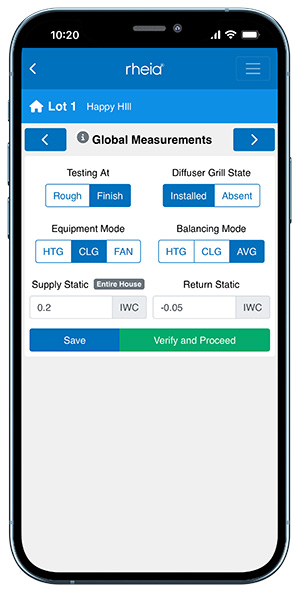

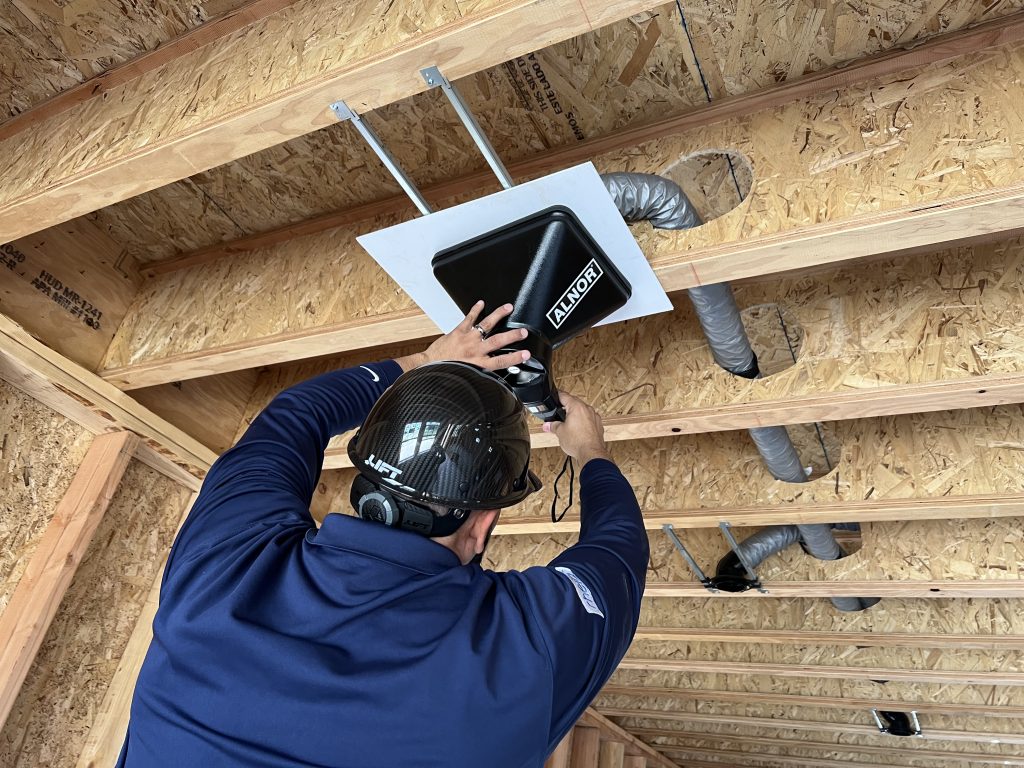
Balance a home in 30 to 45 minutes. Access balancing reports 24/7. Rheia Verify is a free app designed to make the HVAC balancing process simpler and easier, rewarding the technician with time savings and the HVAC contractor with fewer call-backs.
CONNECT WITH US
Schedule a brief intro meeting with your team and ours to learn more.
Drop us a note and we’ll get it scheduled!
Why Balance?
Balancing HVAC systems is crucial for several reasons, and Rheia LLC emphasizes the importance of this process to ensure optimal performance, comfort, and efficiency in homes. Rheia requires new homes to have been Verified to be valid for our product warranty
Consistent Temperatures
Proper HVAC balancing, when combined with the Rheia system, helps eliminate hot and cold spots to create more even temperatures throughout the home. This is achieved by distributing airflow from the HVAC equipment through multiple ducts into each room, and then adjusting the airflow balance of the system using dampers built into each duct as specified by Rheia’s Verify app in reference to the HVAC design and the equipment operating recommendations.
Energy Efficiency
A balanced HVAC system operates more efficiently, reducing energy consumption. This efficiency is partly due to the correct sizing of HVAC equipment and the proper placement of ducts and diffusers in conditioned spaces, which minimizes energy losses versus ducts and equipment located in unconditioned attics and crawlspaces.
Improved Comfort
By using more diffusers per room, Rheia’s system provides gentler and more even air distribution, enhancing overall comfort without the feeling of cold or hot air blasts. This approach also contributes to better humidity control, and a quieter operation and allows for greater flexibility in interior design, as furniture placement does not obstruct airflow.
Reduced Operating Costs
Efficient and well-balanced HVAC systems reduce operating and maintenance costs. When an HVAC system is balanced correctly, it runs less frequently and for shorter periods, decreasing wear and tear on the equipment and lowering energy bills.
Seasonal Adjustments
In some markets, rebalancing the HVAC system seasonally to accommodate large swings in outdoor temperatures will help to maintain optimal comfort levels. Rheia’s system and Verify app make these adjustments straightforward and quick, ensuring that the HVAC system continues to perform efficiently regardless of external weather conditions.
Rheia Verify: It's a process, not just an app
The Rheia Verify air balancing process takes ONLY 30 to 45 minutes. Prior to balancing the installation, the lot will have been entered into the Rheia Manage database for access by Rheia Verify when on the job site. The Rheia Verify app walks the HVAC technician through TEN simple steps to balance a Rheia air distribution system.
Ten Step Verify Process
Step 1
Register for access to Rheia VERIFY
At verfiy.rheiacomfort.com, sign up with your work email, and follow the instructions in your email notification. Work with your administrator to get access to your communities and lots.
Step 2
Validate the lot
Before starting the balancing process, confirm the address and the lot’s orientation. Add the lot orientation if needed. Confirm the HVAC design is uploaded and is correct for the home being balanced. Make sure you have all the necessary tools and documentation.
Step 3
Inspect the installation
Check that all boots are accounted for per the design. Confirm the boots have been caulked or sealed to the drywall. Make sure all dampers are set to the open position.
Step 4
Check the installed equipment
Check the specifications of the installed equipment and confirm the blower speed is set correctly per the design. Check the model number of the installed equipment to the information in the Verify App. Use the Blower Data Chart to set the correct fan speed per the Verify App
Step 5
Take a static pressure measurement
Enter the static pressure measurements into the Verify app. Remove the filter and set the operating mode of the equipment and set operation mode in the Verify app. Take Supply and Return static pressures as well and entering them into the Verify app.
Step 6
Measure the airflows
Ensure the equipment is operating in a steady-state mode. Record the measured airflows in the Verify app. Reference the construction documents to identify each diffuser being measured.
Step 7
Set the final damper positions
Ensure the equipment is operating in a steady-state mode. Record the measured airflows in the Verify app. Reference the construction documents to identify each diffuser being measuredRun the balancing process in the VERIFY app. Follow the app reccommendations and set dampers to their final positions.
Step 8
Final static pressure check
Take a final static pressure measurement to make sure it is within limits. The commissioning process is now complete.
Step 9
Report review
Review the Verify Report to ensure the system is operating within design total static pressure and supply ducts are meeting Manual J airflow requirements.
Step 10
Corrective action
After reviewing the Verify report, take any corrective action as needed.
TECHNICAL GUIDES & MANUALS
Download the Rheia Airflow Commissioning Manual for clear, professional guidance to streamline commissioning and deliver perfectly balanced airflow on every project.
Air Balancing Resources
Use these resources to get up to speed on using the Rheia Manage and Verify platform.
Rheia Balancing at-a-glance Airflow Commissioning Process
Rheia Manage Technician Responsibilities
The Department of Energy conducted research to quantify the potential benefits of improving current installation practices for heating, ventilation, and air conditioning (HVAC) equipment.
Access it here Residential Installation Best Practices