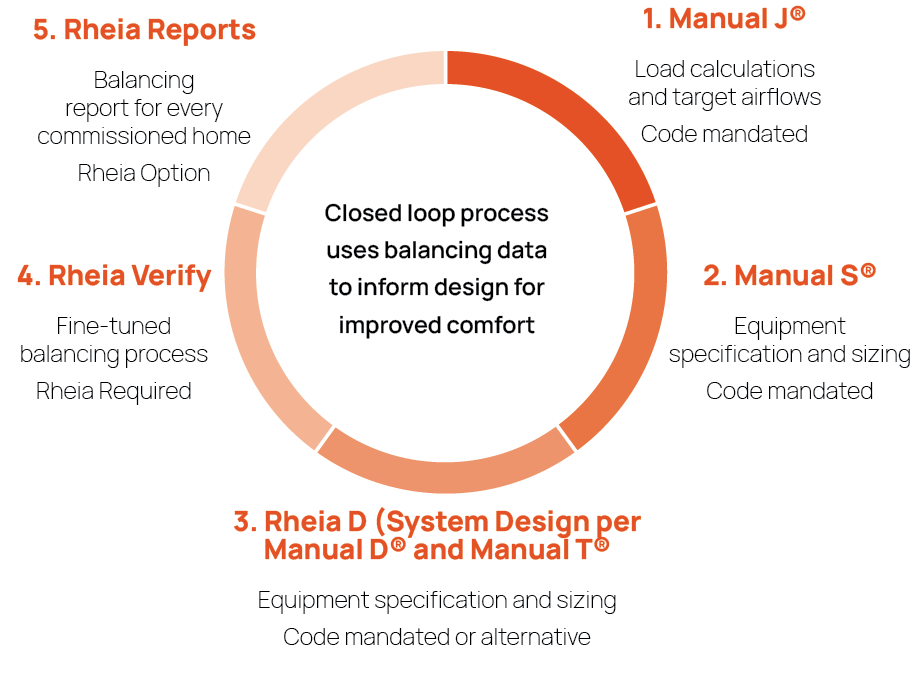
Rheia Design Process

The key principle in designing with Rheia is that all equipment—air handling unit, ducts, returns—is located entirely within the building thermal envelope. The Rheia design process calculates the required airflows before installation and optimizes the plans for cost and comfort while syncing data with Rheia Verify to fine-tune balancing so every room gets the right amount of air.

  • Rheia Design Process plugin for Right-Suite® Universal (RSU) software. Intended for experienced HVAC designers who are familiar with the RSU environment.
  • Rheia uses custom component sizing approach which supersedes Manuals D and T.
  • Rheia provides a comprehensive training program and tools to bring designers up to speed on the Rheia design methodology.
  • Eliminate the challenges of room-to-room airflows with an engineered approach that defines the performance of each duct run.
  • Designs are uploaded into the Rheia Manage database which is used by Rheia Verify to balance the home
  • Balanced airflow and well-placed diffusers deliver even temperatures throughout the home.
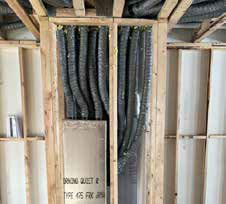
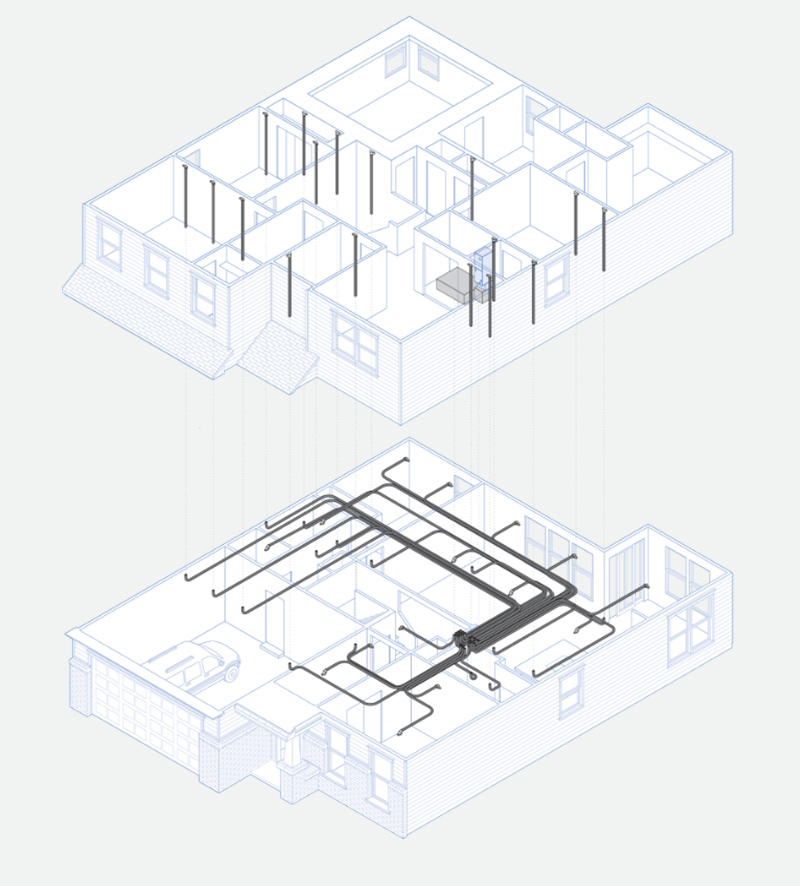
Duct Layout 1
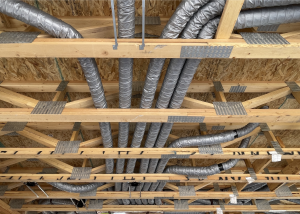
Duct Layout 2

Closing the loop on comfort

Stage 1 – Manual J®
Load calculations and target airflows.
Using code mandated Manual J®.

Stage 2 – Manual S®
Equipment specification and sizing.
Using code mandated Manual S®.

Stage 3 – Rheia D (System Design per Manual D® and Manual T®)
Accurate design through airflow prediction size and locate diffusers, grilles and registers.
Using code mandated Manual D® and Manual T® or alternative.

Stage 4 – Rheia Verify
Fine-tuned balancing process.
Rheia required.

Stage 5 – Rheia Report
Balancing report for every commissioned home.
Rheia option.

Design process

CONNECT WITH US

Schedule a brief intro meeting with your team and ours to learn more.

Drop us a note and we’ll get it scheduled!

Design Solutions

1-Story Solutions

Typically a slab-on-grade foundation is constructed with the air handler and ductwork located in the attic, or the air handler in a mechanical closet and the ductwork in the attic.

  • Rheia installations require the air handler to be located in a mechanical closet inside the home, or in the garage (with appropriate insulation and air sealing on exterior walls).
  • A central location for the mechanical room keeps duct runs shorter which reduces cost and optimizes performance. The home is conditioned through sidewall micro-diffusers.
  • Upflow air handler to a Rheia manifold located in the mechanical closet.
  • Duct routing options are:
    Ducts in the conditioned space by locating them in inverted trusses that are air sealed and insulated. Ducts run in thickened walls that can accommodate the 3” or 4” ducts. Ducts in dropped ceilings and soffits are discreetly located in hallways, closets, and bathrooms.
  • A central return with either insulated jump ducts or pass-through grilles works well for this system layout.
Routing One Story D1 1
1

Closet with Uplfow ManifoldCentral closet with upflow air handler and manifold

1 of 5
2
IMG 3099
Thickened wall enabling ducts to be run horizontally
2 of 5
3
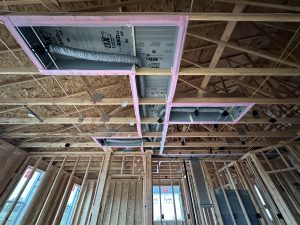
IMG 5508
Inverted truss soffit to enable ducts to be run without the need for dropped ceilings
3 of 5
4
Dropped Ceiling Installation
6” dropped ceilings are used in low-impact areas
4 of 5
5
20240117 230828798 iOS
Air sealed and insulated soffits for duct runs
5 of 5
2-Story Solutions

A slab-on-grade or basement foundation home is typically constructed with the air handler located in either a
first or second floor closet for slab-on-grade foundations, or in the conditioned basement under the home. Ductwork is typically located in bulkheads and chases for first-floor distribution and in the attic for second-floor distribution.

  • Rheia installations require the air handler to be located in a mechanical closet inside the home on the first or second floor, or in the basement.
  • A central location for the mechanical room will keep duct runs shorter which reduces cost and optimizes performance.
  • Downflow air handler and Rheia manifold if located on the second floor.
  • Rheia ducts are located in the home’s conditioned space in floor cavities and in interior walls.
  • The lower floor is conditioned through ceiling diffusers, the second floor is conditioned through sidewall diffusers.
  • Insulated ducts and air-sealed chases may be needed for rooms above a garage.
  • A central return with with either insulated jump ducts or pass-through grilles works well for this system layout.
Routing Two Story
1
Closet with Uplfow Manifold
First floor mechanical closet with up flow air handler and manifold
1 of 6
2
B Indy 2
Alternative down flow air handler with manifold in the floor cavity
2 of 6
3
20220426 205026204 iOS
Precut I-joist routing for larger duct bundles
3 of 6
4
IMG 0223
Ducts run in joist bays to ceiling diffuser locations
4 of 6
5
Lennar Living Room
Ceiling diffusers for most ground floor rooms
5 of 6
6
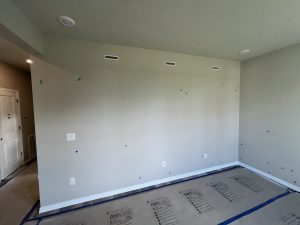
Slotted Diffusers in an Unfurnished Room
High sidewall ducts for upper floor air distribution
6 of 6

3-Story Solutions

Townhome construction is typically built with a slab-on-grade foundation a living space and garage on the ground floor, and the air handler located in a mechanical closet. Ductwork is typically located in bulkheads and chases for first-floor distribution and in the attic for second-floor distribution.

  • Rheia installations require the air handler to be located in a mechanical closet inside the home, typically on the ground floor to optimize floor space usage.
  • Up-flow air handler and Rheia manifold.
  • Ductwork is routed through a vertical chase to the first and second floors.
  • Rheia ducts are located in the home’s conditioned space in floor cavities and in interior walls.
  • Lower floors are conditioned through a combination of ceiling and sidewall diffusers. The upper floor is conditioned through sidewall diffusers.
  • A central return with either insulated jump ducts or pass-through grilles works well for this system layout.
Routing Townhouse
1
Upflow Air Handler Town Home
Lower floor mechanical closet with up flow air handler and manifold
1 of 5
2
Rheia case study Orchard Place 01 2
Vertical chase to route ducts to floors above
2 of 5
3
Ducts running through open web trusses
Open web trusses for easier direct duct routing
3 of 5
4
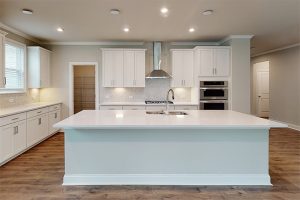
Beazer Homes Kitchen
Ceiling diffusers for most ground floor and middle floor rooms
4 of 5
5
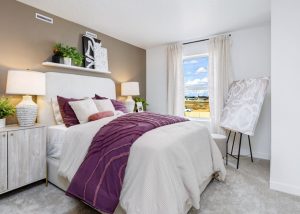
Lennar Bedroom
High sidewall ducts for upper floor air distribution
5 of 5

RHEIA IN ACTION

View the results from our pilot home studies in several communities across the United States, representing different building practices and performace in varying climates.